Self-directed 3D motion study · Blender
MGK x Dossier Case Study: Bottled rebellion.
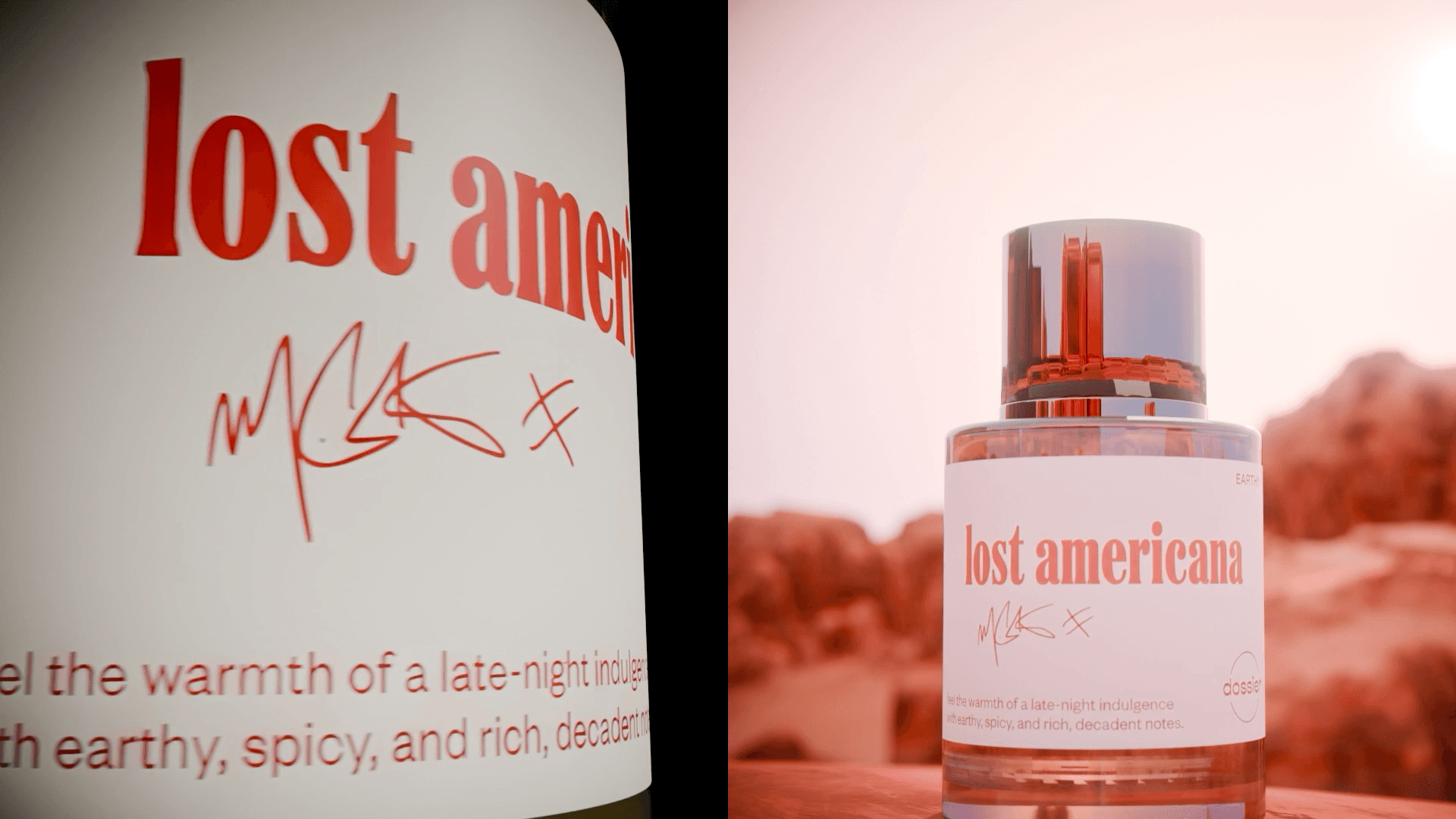
A personal 3D motion design case study built entirely in Blender, exploring luxury fragrance commercial aesthetics inspired by the Machine Gun Kelly x Dossier collaboration. It pushes photorealistic glass, fluid simulation, and cinematic lighting to capture the rebellious elegance of a high-end perfume spot.
Personal project · Not affiliated with MGK or Dossier
- Category
- Motion Design
- Timeline
- 2026
- Modeled, lit & rendered
- Blender
- Photoreal glass & liquid
- Cycles
- Fluid simulation
- Mantaflow
- Edit & composite
- After Effects
The film
My role
A one-person production, from first model to final grade.
- Art Direction
- 3D Modeling
- Lighting
- Simulation
- Animation
- Compositing
Built with
The pipeline behind every frame.
- Blender 5.0
- Cycles
- Mantaflow
- Geometry Nodes
- After Effects
Scene 01
The brief I wrote myself
This self-directed study was built to push my motion design work into the luxury product space. The goal was a fragrance spot that balances dark, edgy aesthetics with the elegance expected of high-end perfume advertising.
Scene 02
Glass, liquid, light
Everything was built from scratch in Blender:
- Cycles render engine for photorealistic glass and liquid materials
- Mantaflow fluid simulation for dynamic liquid effects
- HDRI lighting combined with custom area lights for dramatic studio setups
- Procedural textures and PBR materials for realistic surfaces
- Geometry nodes for particle-based environmental effects
Scene 03
Visual direction
The look draws from contemporary luxury advertising, with darker, more rebellious edges that suit the MGK identity:
- High-contrast lighting with deep shadows and selective highlights
- A restrained palette with a single, strategic accent color
- Slow, deliberate camera moves that linger on product details
- Liquid simulations that convey both luxury and motion
- Kinetic typography woven into the edit
Scene 04
Animation & compositing
The animation combined keyframed camera work with physics-based simulation. In After Effects I handled the edit and compositing, adding lens effects, motion blur, and a final color grade for the cinematic commercial finish.
End Card
What it taught me
This project reinforced a few core motion design principles:
- Pre-visualization and storyboarding save hours on complex 3D sequences
- Glass and liquid materials need careful optimization to render efficiently
- Simulation work is a constant balance between artistic intent and technical limits
- Iteration matters: the final piece went through several lighting and animation passes
Let's make something cinematic.
Let's discuss how I can help bring your project to life.